Forget Silicon Valley: Utah Is Becoming the Smartest Place to Build Your R&D Operation
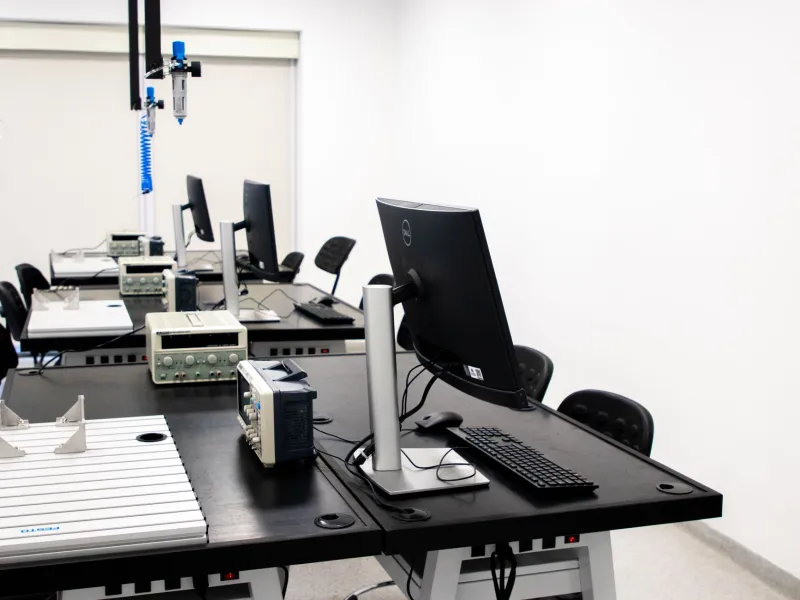
For decades, the conventional wisdom was simple: if you wanted to build a world-class research and development operation, you set up shop in Silicon Valley, Boston's Route 128 corridor, or maybe Austin if you were feeling adventurous. You paid the rent, absorbed the talent wars, and accepted that doing cutting-edge work meant burning cash at an almost theatrical rate.
That playbook is getting rewritten — and Utah is holding the pen.
A growing number of corporations, ranging from mid-size tech firms to Fortune 500 giants, are either relocating or significantly expanding their R&D functions along the Wasatch Front. The reasons aren't mysterious or complicated. They're practical, financial, and increasingly hard to argue with.
The Cost Gap Is Bigger Than You Think
Let's start with the numbers, because they're genuinely striking. Office space in Salt Lake City averages roughly $25 to $30 per square foot annually, compared to $75 to $100 per square foot in San Francisco's South of Market neighborhood. For a company building out a 20,000-square-foot R&D facility, that gap translates to millions of dollars in annual savings — money that can be redirected into actual research.
Salary differentials compound those savings further. A senior software engineer or research scientist in Salt Lake City typically earns 25 to 35 percent less than their counterpart in the Bay Area, while still enjoying a quality of life that's arguably superior when you factor in housing costs, commute times, and outdoor recreation access. Researchers aren't just taking a pay cut to move here — many of them are genuinely thriving.
That combination of lower overhead and competitive but sustainable compensation is exactly what drew Domo, the cloud software company, to build its headquarters and core development operations in American Fork rather than chasing coastal prestige. It's the same logic that led Adobe to maintain a significant engineering and research presence in Lehi, part of the stretch of tech-heavy communities that locals have long dubbed Silicon Slopes.
The University Pipeline Nobody Talks About Enough
Here's something that often gets overlooked in conversations about Utah's business appeal: the state has a remarkably productive higher education ecosystem for companies hungry for research talent.
The University of Utah, just minutes from downtown Salt Lake City, has quietly built one of the most respected computer science and engineering programs in the country. Its research output spans machine learning, biomedical engineering, data science, and cybersecurity — and its graduates have a strong track record of staying in state, at least initially, rather than immediately fleeing to the coasts.
Utah State University in Logan and Brigham Young University in Provo round out a talent triangle that gives companies real options when it comes to recruiting. BYU in particular produces a steady stream of technically skilled graduates who are often multilingual — a genuine asset for companies with global R&D ambitions.
The University of Utah's Research Park, one of the oldest and most established university-adjacent innovation districts in the country, has been quietly incubating this ecosystem for years. Companies that set up operations there get proximity to faculty researchers, access to lab facilities, and a front-row seat to emerging research before it hits the academic publishing circuit.
"We're not trying to be Silicon Valley," one economic development official with the Salt Lake City Mayor's Office told us. "We're trying to be the place where serious companies can actually execute on their research goals without spending half their budget on real estate and retention bonuses."
Government Incentives That Actually Move the Needle
Utah's political environment is business-friendly in a way that goes beyond talking points. The state has consistently ranked among the top in the country for regulatory efficiency and tax competitiveness, and it has built a suite of R&D-specific incentives that corporate site selectors are paying close attention to.
The Utah Governor's Office of Economic Opportunity administers several programs that can meaningfully offset the cost of establishing a research operation in the state. The Economic Development Tax Increment Finance (EDTIF) program offers post-performance tax credits tied to job creation and capital investment — meaning companies get rewarded for actually following through on their commitments rather than just making promises.
Additionally, Utah's Research Activities Credit allows qualifying companies to claim credits against their state tax liability for expenditures on qualifying research activities. It's not flashy, but for an R&D-heavy operation, it adds up fast.
The state has also invested in building out the physical and digital infrastructure that serious research requires. High-speed fiber connectivity, proximity to major data centers, and improving air connectivity through Salt Lake City International Airport's recent terminal expansion all make the logistics of running a distributed R&D operation significantly more manageable.
Real Companies Making Real Moves
The anecdotal evidence is becoming hard to dismiss. Qualtrics, now one of Utah's most prominent tech success stories, has continued expanding its engineering and product research functions in Provo even after its high-profile acquisitions and IPO. The company's leadership has been candid about the fact that Utah's talent market gives them a competitive edge they wouldn't have on the coasts.
In the life sciences space, companies like Recursion Pharmaceuticals are using Salt Lake City as their base for genuinely frontier research, combining AI and biology in ways that are attracting serious venture attention and corporate partnership interest. The fact that they chose Utah for this work — not Cambridge, not San Diego — says something.
Even companies without Utah roots are taking notice. Several large aerospace and defense contractors have expanded their technical research footprints in the state, drawn by the combination of a security-cleared workforce, proximity to Hill Air Force Base, and the general cost advantages that make long-horizon R&D projects financially viable.
What This Means for Utah's Entrepreneurial Community
For local entrepreneurs and professionals, this R&D migration isn't just interesting news — it's a genuine opportunity. When large companies build research operations in a region, they create spillover effects that benefit the entire ecosystem.
Senior researchers spin out to start companies. Corporate R&D budgets fund local suppliers and contractors. University partnerships deepen. The talent pool gets richer, and the network effects that make innovation districts actually work start to compound.
If you're an entrepreneur building something in a technical space, or a professional looking to work at the frontier of your field, the fact that serious R&D money is flowing into Utah is worth paying attention to. The connections you make today — with the researchers, the corporate innovation teams, the university labs — could define the trajectory of your next venture.
Salt Lake City isn't trying to out-Silicon Valley Silicon Valley. It's building something different: a place where the work actually gets done, the talent actually stays, and the math actually makes sense. For a lot of companies, that's starting to sound a lot more appealing than the alternative.