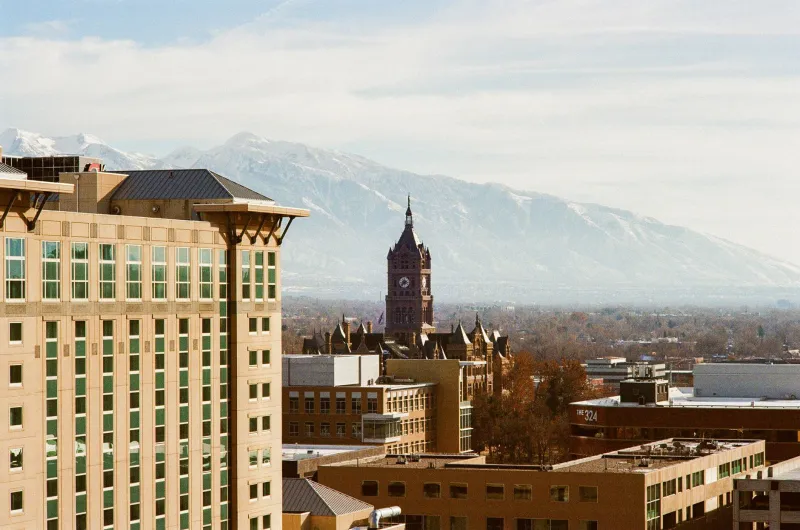
Ski Slopes Over Stock Options: Why High Earners Are Trading Coast Salaries for Utah's Good Life

Not long ago, the idea of turning down a fat Silicon Valley salary to move to Salt Lake City would've sounded like career suicide. Now? It's practically a trend. Professionals with serious resumes — engineers, product managers, marketers, finance folks — are packing up their apartments in San Francisco, Austin, and New York, and heading to the Beehive State. Not because they couldn't hack it on the coasts. Because they decided they didn't want to.
Utah's pull isn't a mystery once you start talking to the people who've made the move. The reasons stack up fast: housing you can actually afford, mountains you can actually reach on a Tuesday evening, and communities that feel like, well, communities. For a lot of professionals, that combination is starting to outweigh a compensation package that looks great on paper but evaporates the moment you try to buy a house in Palo Alto.
The Math That's Changing Minds
Here's the thing about coast-to-coast salary comparisons — they rarely tell the whole story. A software engineer pulling $180,000 in San Francisco sounds like a dream until you factor in a $4,000-a-month one-bedroom apartment, state income taxes that bite hard, and the kind of commute that eats two hours out of your day before you've even opened your laptop.
Move that same engineer to Salt Lake City or Provo, where a comparable role might pay $130,000 to $150,000, and the picture shifts dramatically. Utah's cost of living — especially housing — means that $130K here can stretch further than $180K in the Bay Area. Couple that with no city income tax in most municipalities and proximity to some of the best skiing, hiking, and mountain biking in the country, and the "pay cut" starts to feel more like a lifestyle upgrade.
Career coaches working with relocating professionals say this kind of recalculation is happening more often than people expect. It's not just about dollars anymore. People are running total life audits — factoring in time, health, family access, and mental bandwidth — and Utah keeps coming out ahead.
What Relocators Are Actually Saying
Talk to professionals who've made the Utah move in the last few years and a few themes come up over and over again.
For a lot of them, it started with burnout. The grind culture of major tech hubs is real, and after a certain point — especially post-pandemic — people started asking whether the prestige was worth the cost. Utah offered a reset. The chance to work hard and have a life outside of work, which, for a generation of professionals who grew up watching their parents sacrifice everything for a career, feels genuinely radical.
There's also the community factor. Utah has a reputation for strong social ties, and that's not just a talking point. Neighborhoods where people actually know each other, local sports leagues, faith communities, outdoor clubs — the social infrastructure here is dense in a way that's hard to replicate in a city where everyone's a transplant and nobody stays long enough to put down roots.
Families, in particular, are drawn by what Utah offers for kids: good schools, safe neighborhoods, and outdoor access that turns childhood into something more than screen time. For professionals with young families, that's a powerful argument.
HR Leaders Are Paying Attention
Utah employers — especially those competing for talent against national or global companies — have started leaning into the lifestyle angle hard. Recruiters here know they can't always match a Google or Amazon salary offer dollar for dollar, so they're selling the full package.
HR leaders at mid-sized Utah companies talk about leading with quality of life in job postings and interviews. Mentioning proximity to Park City ski resorts, flexible schedules that let employees actually use that proximity, and a company culture that doesn't expect you to answer Slack messages at 10 p.m. These aren't just perks — they're part of the compensation conversation.
Some companies are going further, offering relocation assistance, remote-first policies that let new hires ease into the move, and partnerships with local outdoor recreation providers as employee benefits. When your job literally helps you get on the slopes more, that's a recruiting pitch that's hard to beat.
The strategy is working. Employers report that candidates who relocate to Utah tend to stay longer, report higher job satisfaction, and integrate faster into company culture. The lifestyle alignment creates a kind of loyalty that signing bonuses alone can't buy.
The Outdoor Economy Connection
Utah's outdoor recreation industry isn't just a backdrop for this story — it's an active part of the economy that makes the lifestyle pitch credible. The state is home to five national parks, world-class ski resorts, and more trail miles than most people could explore in a lifetime. That's not an accident of geography; it's a genuine asset that Utah has been smart enough to build around.
For professionals used to paying $200 for a weekend escape from a major city, the idea of living 30 minutes from world-class skiing or mountain biking is almost absurd. But that's the reality for a lot of Utah residents. And increasingly, it's the hook that gets talented people on a plane to come check the place out.
Networking events in Utah are starting to reflect this culture, too. Hike-and-network meetups, ski industry mixers, and outdoor-focused professional groups are popping up across the Wasatch Front. For a business hub that prides itself on connecting professionals, Utah's outdoor culture is becoming part of the connective tissue.
Is This Sustainable?
Fair question. As more people discover Utah's advantages, housing prices have climbed — especially in Salt Lake County and the areas around Park City. The affordability edge that made Utah so attractive is getting squeezed, and longtime residents have complicated feelings about the growth.
But even with rising home prices, Utah remains significantly more affordable than coastal metros. And state and local leaders are working on housing supply issues with a seriousness that's hard to find in places like California, where zoning battles have stalled construction for decades.
For now, the window is still open. Professionals considering a move to Utah are still finding a place where their dollar goes further, their commute is shorter, their weekend is genuinely their own, and their career doesn't have to take a backseat to get there.
The Bigger Picture for Utah Business
For Utah's business community, this talent migration is a genuine opportunity. Every skilled professional who relocates here brings experience, networks, and ideas that strengthen the local ecosystem. Startups get access to seasoned talent. Established companies get fresh perspectives. And the overall professional community gets richer and more diverse.
If you're a Utah employer, the message is clear: lean into what makes this place different. The mountains, the communities, the cost of living, the work-life culture — these aren't soft benefits. They're strategic advantages in a tight labor market. Use them.
And if you're a professional on the fence about making the move? Maybe it's time to run your own total life audit. The numbers might surprise you.